
Inspired by the notion of being part of a cosmic ecosystem of energies, manifesting in different forms, I acknowledge the creative and healing power of movement and sound. My teachings, as well as my creations develop through the integration of different dance-theater, voice training, and bodywork methods.
The main techniques influencing my work are: Open Source Forms (OSF), Release Technique, Body Mind Centering, Contact Improvisation, Butoh, Qi Gong and Voice practice.
Open Source Forms
OSF is a Dance Method rooted in the Skinner Releasing Technique and developed by the New York Choreographer and performer Stephanie Skura. It Involves shedding outer layers, accessing primal energy, agility navigating subconscious realms, imagery as a potent tool for transformation and discovery, developing a high degree of self-consciousness. This work celebrates diversity, collaboration & individual empowerment: free of inhibitions invites the mind to collaborate in the liberation of the self from constructed beliefs and patterns. OSF sessions offer powerful tools to access specificity, courage and originality in movement, vocal practice & creative practice. A key aspect is individual and group creative empowerment as instigators of positive change on the planet.
All levels and background are welcome! One of the amazing qualities of OSF is to be available to professional dancers as well as to non professional. It allows each person to learn and challenge themselves with their own possibilities and skills.
Regular Classes
Every TUESDAY and second WEDNESDAY 6-8pm in Das Andere Theater - DAT, Graz
October+November 2025 Zoom Classes
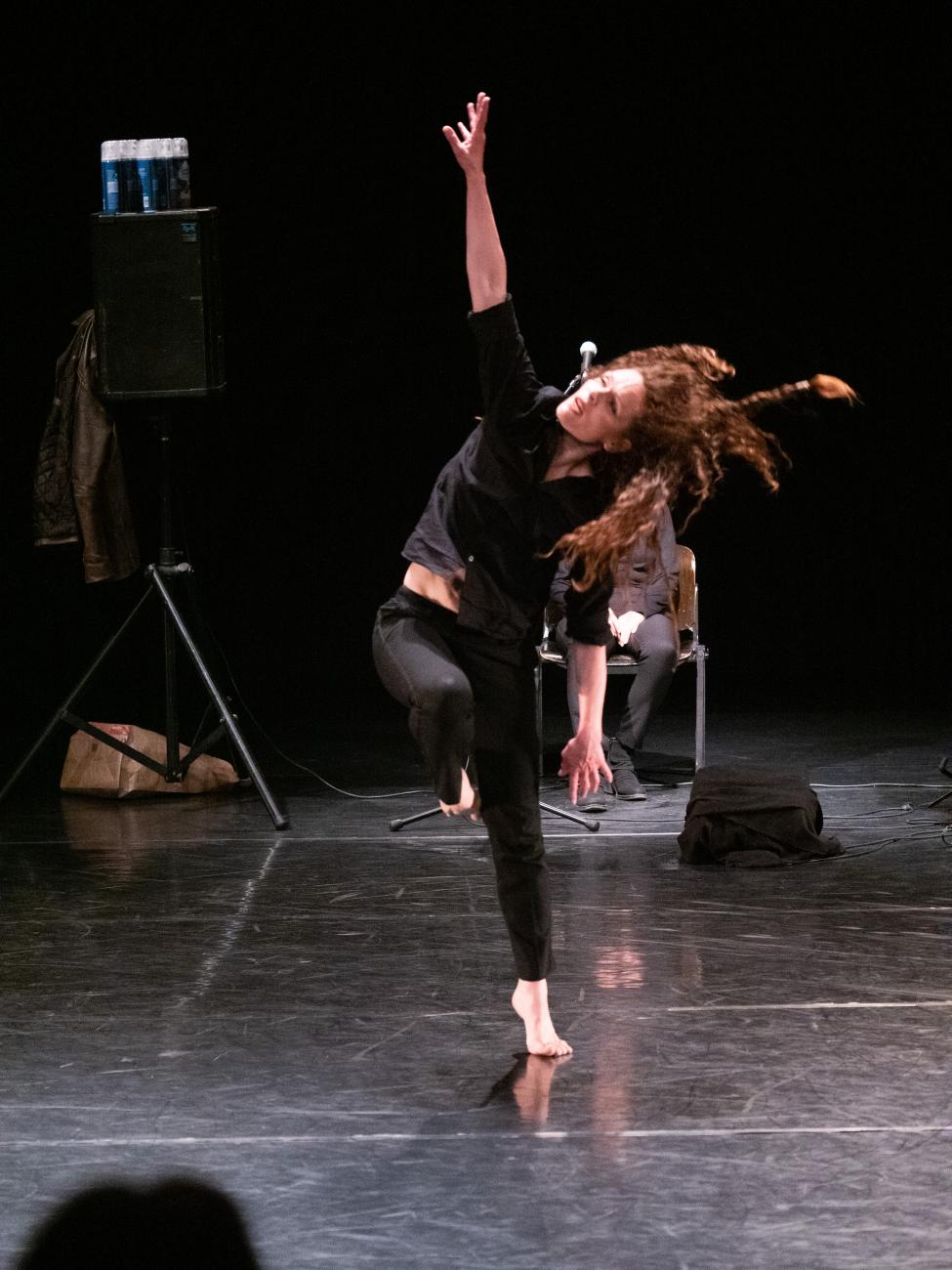
Principles in motion – Release technique
This class brings together various sets of exercises inspired by different dance techniques, such as ballet, modern, and various Styles of Contemporary and Postmodern Dance. Shifting the modality of execution of particular steps and movement sequences, I direct the focus on basic Kinetic principles, such as gravity, buoyancy, synchronicity, complementarity, symmetry, as well as on pathways of movement - homologous, homolateral, counter-lateral. Body Mind Centering, Axis Syllabus, and Klein Technique are the major inspirations that inform this class, in which I propose a new perspective on how to practice and think about dance techniques. From a place of non-judgment, where the body is receptive and aware, we explore our anatomy, alignment, dynamics, and qualities, in relation to physical principles that organize and move the body in space.
Release Technique is a method that aims to reeducate mobility, to help the body find its natural alignment, improving strength, flexibility, and agility. It works and explores biomechanical principles; their acknowledgment can be applied to any other technique. We will explore the anatomy and kinetics of specific body parts through improvisation and movement sequences. From the floor to standing, across the floor, and upside down. I will also introduce fundamental elements of Contact improvisation. As we become aware of our internal resources and what the space offers, we discover more original, organic, and effortless movement. We grow more receptive and versatile, respecting ourselves and the environment. We focus on the quality, not quantity, of our actions. By sensing intervals, pauses, and suspension, we build momentum, letting our movement create its own music and rhythms.
I want each dancer to recognize their body's unique power and develop creative, efficient, and sensitive ways to move through space.


Contact Improvisation
Contact Improvisation (CI) is a dance form based on the dialogue between weight, balance, reflexes, and impulses in physical contact between two or more bodies in motion. CI was first presented in 1972 at the John Weber Gallery, New York City, conceived and directed by the American choreographer Steve Paxton. Besides developing through a tangible exploration of natural bodily principles, Contact Improvisation is also a continuous exchange of ideas, curiosity, and questions, which allows humour, imagination, and new stories to be generated and shared across cultures, genres, and ages. In her Caught Falling, Nancy Stark Smith writes that there is no single definition of CI because, from the very beginning, it has been communicated primarily through dancing. For this reason, dancers and teachers collected their notes, descriptions and research to document their experiences, and in 1975 a Contact Improvisation journal was created, which still exists today, Contact Quarterly Magazine. While connecting to our weight in dialogue with the earth, we begin to sense the buoyancy, the resilient state of our tissues, becoming supple resilient.
As we connect to our weight in dialogue with the earth, we begin to perceive buoyancy, the resilient state of our tissues, which become elastic and resilient. We will explore some basic CI skills and develop them through different scores, discovering new responses and movement patterns. The course integrates elements of Body-Mind Centering and Axis Syllabus. By observing Paxton's Spine Movement, we will refine our kinaesthetic and proprioceptive awareness. We will experiment and research counterbalancing skills, weight sharing, flips and lifts, finding confidence and competence in practicing duets, trios or group improvisations.


Permeable Touch - Lab and Intervention
A sensorial kinesthetic journey, exploring the continuous dialogue between our inner and outer landscape. The body is porous, permeable, transforming with its environment. We will refine our awareness, listening throughout our entire skin, and the body will begin to talk about "this very moment".
I Touch while feeling touched, recognizing myself, in the other, the other in and the constant exchange between us and the environment. Being touch by something can be expression of apparent stillness, but in reality it is the manifestation of the vibration that each and every thing in life radiate. My interest is to explore the qualities and information that each specific touch - physical or not carries within, and to notice how do we respond to it, initiating and developing dialogues, dances, healing pathways. Our starting point is a dive into a deep state of awareness, quite alertness and presence. Focusing on the "in-tensions," we become conscious of the operating system, which shapes and nurtures the tone of our muscles, bones, skin, organs, and our experience of touch/and being touch.
Through Movement and sound we will explore the wide range of possibilities that our bodies have to offer. I developed scores and games, inspired by Contact improvisation, Body Mind Centering, Qi gong, Butoh and Voice work studies. We will investigating the different kinds of touch, the action of yielding, and from there, we will experience the rhythms, shapes of each body layer, developing their unique ways to move, connect, touch, and being touched.
Yoga and Pilates
-
Alchemical Flow
-
Pilates focused on internal alignment and postural muscles
Advance, beginners and private session - 90 minutes
Alchemical flow
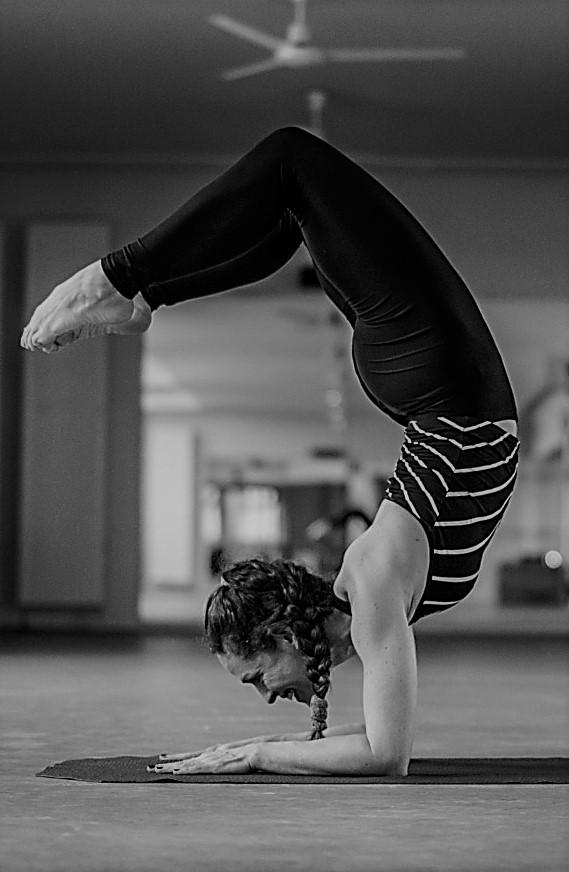
Inspired by the different moon's phases and relationships with the planets, as a common denominator among all elements in Nature - one of each is the human being - Alchemical Yoga Flow develops through the 7 Stages of Alchemical transformation - Calcination, Dissolution, Separation, Conjunction, Fermentation, Distillation, Coagulation. The moon position will determine which quality the class will focus on and consequentially, which body system and practices (back band, legs or core strengthening), integrating breath practice (Pranajama) and Mudras and Mantras to balance the physical and the spiritual engagement. Alchemical Flow combines the dynamic practice of the Vinyasa method, the spiritual path of the Hata Yoga and the dynamic alignment I learned through the study of more than 17 years of somatic practices - Klein Technique, BMC and Yoga Therapy.

Photos: Jim Coleman, Christian Klant